
Contents
Overview
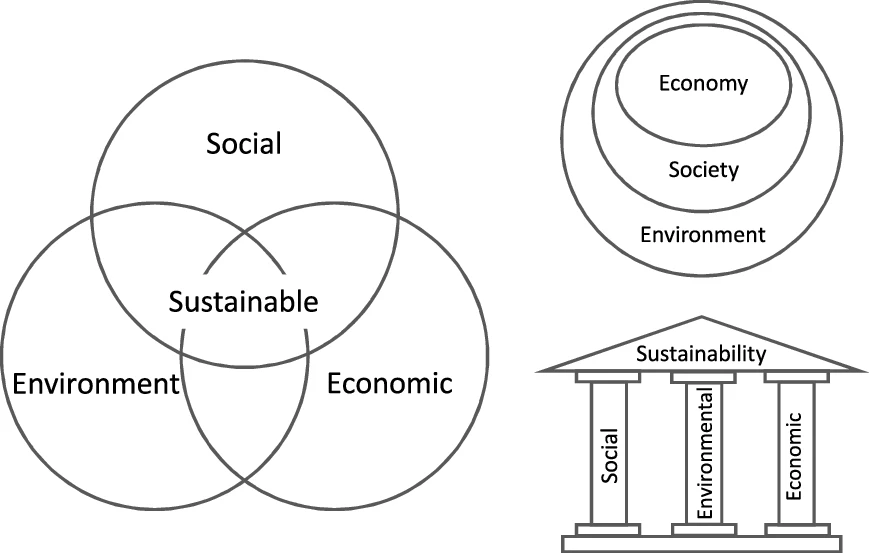
Sustainability refers to the ability to maintain a process or system over a long period of time, balancing environmental, economic, and social dimensions. The concept has gained significant attention in recent years, particularly in the context of climate change and biodiversity loss. As a cultural phenomenon, sustainability has inspired a global movement, with individuals, organizations, and governments working together to create a more sustainable world. With its roots in the Latin word 'sustinere,' meaning to hold up or support, sustainability has become a guiding principle for decision-making at all levels, from personal choices to international policies. The economic dimension of sustainability is a topic of ongoing debate, with scholars discussing the trade-offs between economic growth and environmental protection.
🌎 Origins & History
The concept of sustainability has its roots in the Latin word 'sustinere,' meaning to hold up or support. The idea of sustainability has been around for centuries, but it gained significant attention in the 20th century with the publication of the Brundtland Commission's report, 'Our Common Future.' The report defined sustainable development as 'meeting the needs of the present without compromising the ability of future generations to meet their own needs.' Since then, sustainability has become a guiding principle for decision-making at all levels, from personal choices to international policies.
📊 Economic Dimension
The economic dimension of sustainability is a topic of ongoing debate. Scholars have discussed the trade-offs between economic growth and environmental protection, with some arguing that economic growth is necessary for sustainability, while others argue that it is a major obstacle. The concept of green economy has emerged as a potential solution, with a focus on creating economic growth while reducing environmental degradation. Companies like Patagonia and Reformation have been at the forefront of sustainable business practices, demonstrating that economic growth and environmental protection are not mutually exclusive.
🌟 Environmental Impact
The environmental impact of human activities is a major concern for sustainability. Climate change, biodiversity loss, and pollution are just a few of the environmental problems that need to be addressed.
🌈 Cultural Significance
Sustainability has become a cultural phenomenon, with individuals, organizations, and governments working together to create a more sustainable world. The zero-waste movement has gained significant attention, with people reducing their waste and living more sustainably. The concept of minimalism has also emerged as a way of living, with a focus on reducing consumption and living more simply.
📈 Current State & Trends
The current state of sustainability is complex and multifaceted. While there have been significant advances in sustainable technologies and practices, there is still much work to be done.
💡 Innovative Solutions
Innovative solutions are needed to address the challenges of sustainability. The concept of circular economy has emerged as a potential solution, with a focus on reducing waste and promoting recycling. The sharing economy has emerged as a way of reducing consumption and promoting sustainability. Companies like Uber and Airbnb have been at the forefront of the sharing economy, demonstrating that sustainable business models can be profitable and successful.
🌍 Global Cooperation
Global cooperation is critical for achieving sustainability.
🔮 Future Outlook
The future of sustainability is uncertain, but there are many reasons to be optimistic. The concept of regenerative economy has emerged as a potential solution, with a focus on creating a more sustainable and equitable world. As the world continues to grapple with the challenges of sustainability, it is clear that a more sustainable future is possible, but it will require the collective efforts of individuals, organizations, and governments around the world.
Key Facts
- Category
- drum-table-design
- Type
- concept
👥 Social Responsibility
Social responsibility is a critical aspect of sustainability. Companies and individuals have a responsibility to ensure that their actions do not harm people or the environment. The concept of corporate social responsibility (CSR) has emerged as a way for companies to demonstrate their commitment to sustainability. The Global Compact is a key initiative aimed at promoting CSR, with companies committing to uphold human rights, labor standards, and environmental protection.